PhDs and postgraduate research
A PhD by publication is a postgraduate research degree that's based on research you've already undertaken and had published (excluding self-publishing) before registering with us. Peer-reviewed academic papers, complete books or chapters in anthologies, and any other materials accepted for publication, exhibited or performed are all eligible · Applications for the PhD by Prior Publication must include: A list of the publications on which the application is based; A cover letter of no more than words covering: The area(s) in which you have been working; A brief description of the research undertaken; A brief statement about when and where the research was undertaken PhD by publication vs PhD by thesis Work has already been peer-reviewed and critiqued, which gives you an advantage when it comes to your oral examination, Offers a faster (and therefore cheaper) way of earning your doctorate You can often continue working whilst creating your PhD portfolio A PhD
Introduction
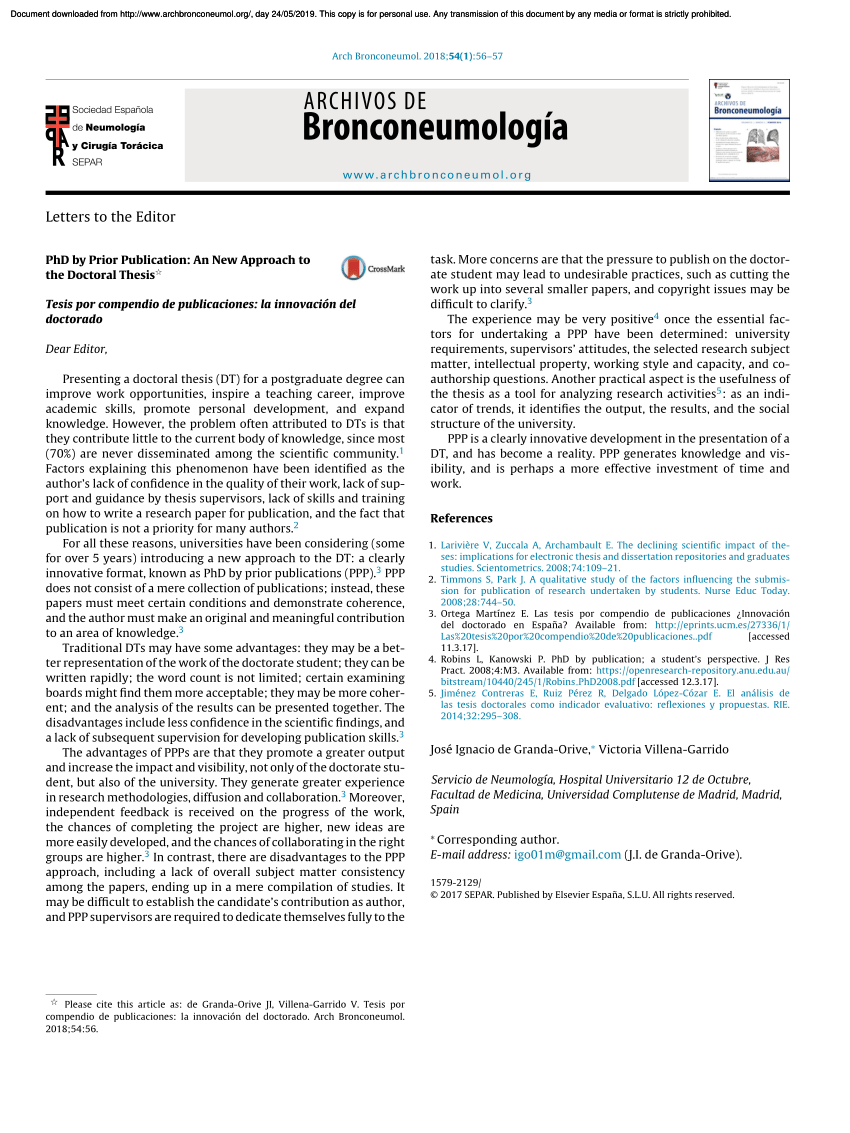
Notable recipients of Ph.D.'s by publication include: Alexander Macmillan (from the University of Cambridge) Mary Ellen O'Connell (from the University of Cambridge) Aubrey de Grey (from the University of Cambridge) Peter Bellwood (from the University of Cambridge) John Mulvaney (from the University In a PhD by Publication, the PhD student authors or co-authors multiple articles, which are then joined together to constitute the PhD thesis. Each article will have the typical set up for the field, most frequently with sections for literature review, conceptual development, analyses, and discussion. The PhD by Publication in the UK. This method of gaining a PhD is relatively new, (even though getting published is important) and hence, the requirements may vary from place to place. Generally, though, instead of submitting a thesis written specifically during three/four years study with the university, you are instead required to submit a number of published papers. In

Global main menu
Notable recipients of Ph.D.'s by publication include: Alexander Macmillan (from the University of Cambridge) Mary Ellen O'Connell (from the University of Cambridge) Aubrey de Grey (from the University of Cambridge) Peter Bellwood (from the University of Cambridge) John Mulvaney (from the University PhD by published work What is PhD published work? A PhD awarded for the submission of a portfolio of published research to the standard of a regular PhD. Who can apply? Candidates may apply for the PhD by published work under Regulation 38 and the associated Guidance on the Requirements for the Award of Research Degrees. Candidates must be either In a PhD by Publication, the PhD student authors or co-authors multiple articles, which are then joined together to constitute the PhD thesis. Each article will have the typical set up for the field, most frequently with sections for literature review, conceptual development, analyses, and discussion. The
What is a PhD by Publication?
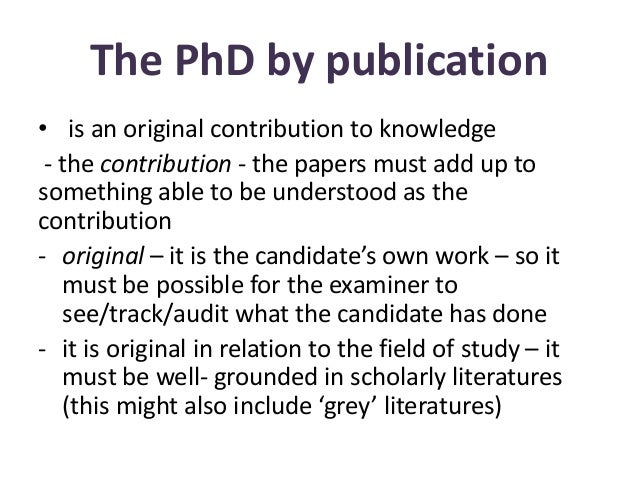
PhD by Publication in the UK. This method of gaining a PhD is relatively new, (even though getting published is important) and hence, the requirements may vary from place to place. Generally, though, instead of submitting a thesis written specifically during three/four years study with the university, you are instead required to submit a number of published papers. In In a PhD by Publication, the PhD student authors or co-authors multiple articles, which are then joined together to constitute the PhD thesis. Each article will have the typical set up for the field, most frequently with sections for literature review, conceptual development, analyses, and discussion. The PhD by publication vs PhD by thesis Work has already been peer-reviewed and critiqued, which gives you an advantage when it comes to your oral examination, Offers a faster (and therefore cheaper) way of earning your doctorate You can often continue working whilst creating your PhD portfolio A PhD

Navigation menu
A PhD by publication is a postgraduate research degree that's based on research you've already undertaken and had published (excluding self-publishing) before registering with us. Peer-reviewed academic papers, complete books or chapters in anthologies, and any other materials accepted for publication, exhibited or performed are all eligible In a PhD by Publication, the PhD student authors or co-authors multiple articles, which are then joined together to constitute the PhD thesis. Each article will have the typical set up for the field, most frequently with sections for literature review, conceptual development, analyses, and discussion. The PhD by Publication in the UK. This method of gaining a PhD is relatively new, (even though getting published is important) and hence, the requirements may vary from place to place. Generally, though, instead of submitting a thesis written specifically during three/four years study with the university, you are instead required to submit a number of published papers. In

No comments:
Post a Comment